Tuesday, 26 November 2013

Fukushima Ghost Town

The Fukushima nuclear disaster showed us once again that nuclear reactors are fundamentally dangerous. Not only do they cause significant damage to the environment, the health of populations and to national economies, the heavy financial cost of a meltdown is inevitably borne by the public, not by the companies that designed, built, and operated the plants. None of the world’s 436 nuclear reactors are immune to human errors, natural disasters, or any of the many other serious incidents that could cause a disaster. Millions of people who live near nuclear reactors are at risk.


The lives of hundreds of thousands of people continue to be affected by the Fukushima nuclear disaster, especially the 160,000 who fled their homes because of radioactive contamination, and continue to live in limbo without fair, just, and timely compensation. They have only a false hope of returning home, yet the Japanese government is eagerly pushing to restart reactors, against the will of its people, and without learning true lessons from Fukushima.


Chernobyl's Ghost Town


The town of Chernobyl was devastated when the Chernobyl nuclear power plant exploded.
The results of this exploded was 31 deaths that we accounted for but was disputed and a range of cancers and deformities which spread across the USSR and Europe.


Detroit Ghost Town


These are some images i have found regarding the city of Detroit in America.
This is Ground Zero in the collapse of a city that has just declared the largest municipal bankruptcy in history, buried beneath up to $20 billion (pounds 13 billion) in debts and liabilities.
The motor industries in Detroit Died.


Thursday, 17 October 2013

Photographers

Earnst Haas

Haas was uninterested in learning photography as a child, though his father—an avid amateur—tried to share his interest. Upon his father’s death in 1940, however, Haas first entered the darkroom, learning to print old family negatives. His interest grew, and he soon began to take his own photographs.

Gary Winnogrand
In the early 1960s Winogrand photographed on the streets of New York City alongside Joel Meyerowitz, Lee Friedlander, Tod Papageorge and Diane Arbus.In 1955 two of Winogrand's photos appeared in The Family of Man exhibition at the Museum of Modern Art (MoMA), New York.


Lee FriedLander
Friedlander studied photography at the Art Center College of Design located in Pasadena, California. In 1956, he moved to New York City where he photographed jazz musicians for record covers. His early work was influenced by Eugène Atget, Robert Frank, and Walker Evans. In 1960, theGuggenheim Memorial Foundation awarded Friedlander a grant to focus on his art and made subsequent grants in 1962 and 1977. Some of his most famous photographs appeared in the September 1985 Playboy, black and white nude photographs of Madonna from the late 1970s. A student at the time, she was paid only $25 for her 1979 set. In 2009, one of the images fetched $37,500 at a Christie's Art House auction.


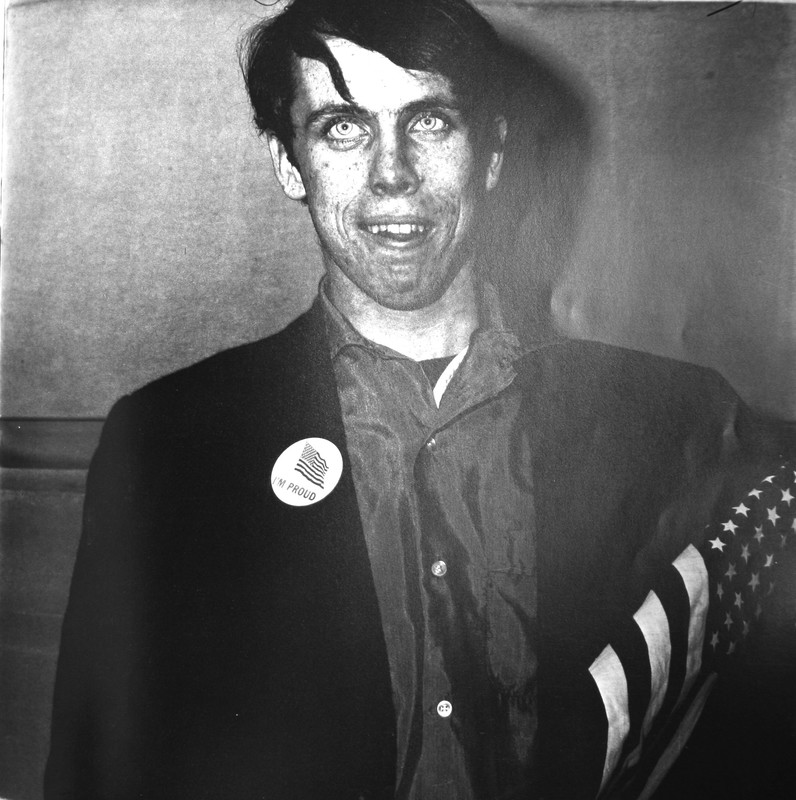
Diane Arbus
The Arbuses' interests in photography led them, in 1941, to visit the gallery of Alfred Stieglitz, and learn about the photographers Mathew Brady, Timothy O'Sullivan, Paul Strand, Bill Brandt, and Eugène Atget. In the early 1940s, Diane's father employed them to take photographs for the department store's advertisements. Allan was a photographer for the U.S. Army Signal Corps in World War Two.